Three group purchasing organizations serve 84% of America's hospitals. U.S. hospitals spent $262 billion on supplies and drugs in a single year. The contract rates behind those dollars are the most closely held numbers in healthcare — and this domain names the asset that makes them visible.
Annual procurement flow through hospital supply, drug, purchased-services, and capital channels
Of U.S. hospitals served by three GPOs — Vizient, Premier, HealthTrust — as primary buying group in 2024 (JAMA Health Forum)
U.S. hospital medical supply expenses in 2023, up $6.6B in one year — plus $115B in drug expenses (AHA)
What commercial plans paid hospitals relative to Medicare for the same services in 2022 (RAND Corporation)
A drug-eluting stent is manufactured to precise tolerances by a handful of global firms. The price attached to it depends on who is asking — and nobody publishes the answer.
A PLOS ONE study of 124 California hospitals found the charge for an angioplasty with a drug-eluting stent ranged from $22,047 to $165,386 — same procedure, no major complications, median $88,350. Observable hospital and market factors explained only 43% of the variation. The rest had no name.
Internationally, the spread is structural: Health Affairs research showed U.S. hospitals paid up to six times what German hospitals paid for cardiac implants, with drug-eluting stents running roughly $1,000 above German prices every year from 2006 to 2014. Manufacturers price the buyer, not the product.

RAND's 2024 Hospital Price Transparency Study, covering 4,000+ hospitals and funded by the Robert Wood Johnson Foundation, found employers and private insurers paid 254% of Medicare for the same services in 2022. Georgia hospitals averaged 345% of Medicare; Michigan, 189%.
CMS's 2021 transparency rule was supposed to fix this. Five years later, only 28 hospitals had ever been fined — while the posted data remained too inconsistent to benchmark. Transparency exposed the variation. It never gave anyone a usable reference rate.
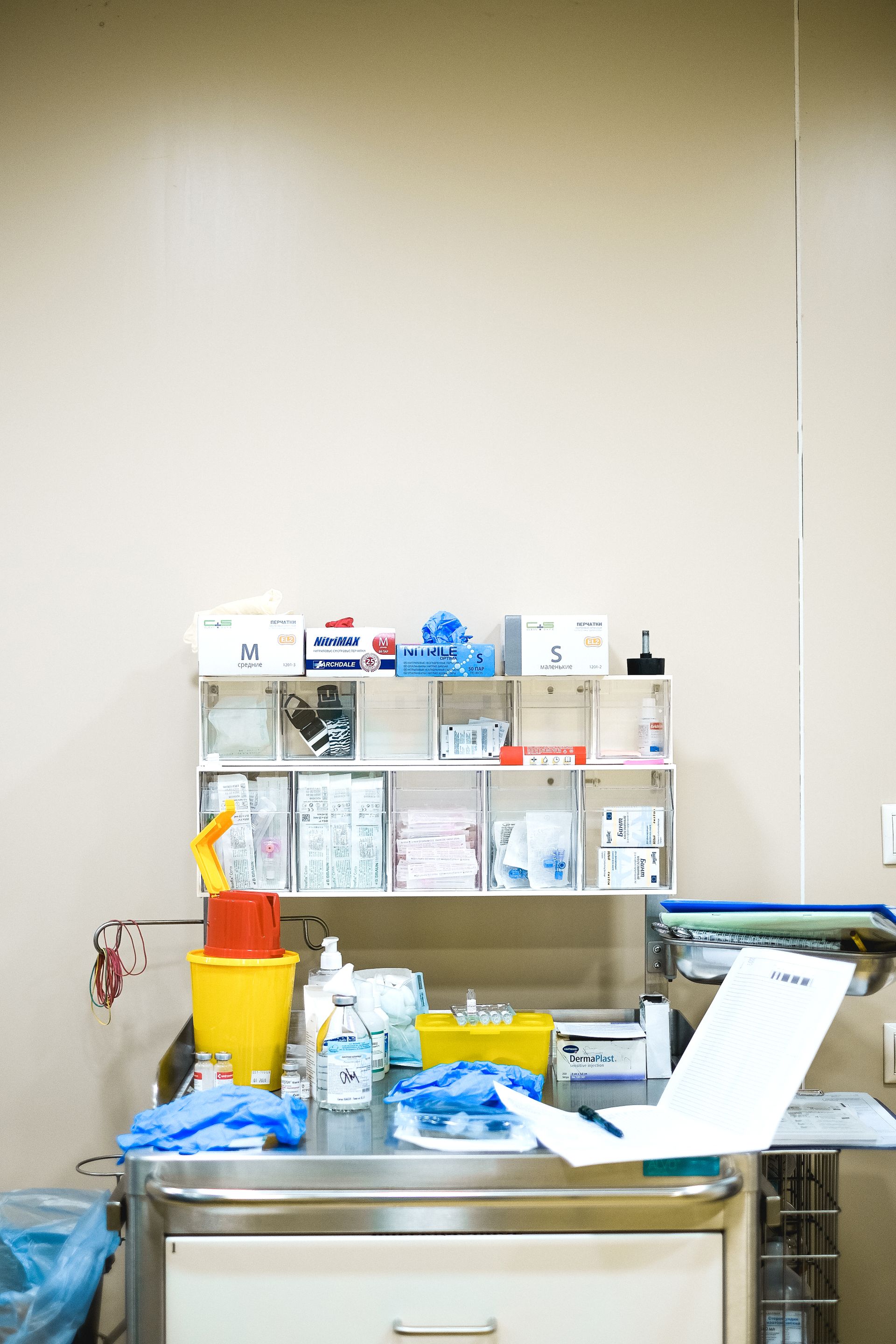
Contract rates — what hospitals actually pay vendors under GPO and direct agreements — are negotiated in private, tiered by volume, layered with rebates, and benchmarked against no public reference. The organization that aggregates them credibly holds something no single hospital can build alone.
That is what this domain names: the reference rate for hospital purchasing. A benchmark, a data product, a marketplace — whatever the buyer builds, the name says exactly what it is.

A 120-bed community hospital cannot staff a team to benchmark 40,000 line items. A contract-rate reference lets supply-chain leaders verify every vendor quote against the market — and renegotiate with evidence instead of guesswork.
Vizient, Premier, and HealthTrust now serve 84% of U.S. hospitals. For a GPO, a challenger buying group, or a regional alliance, this domain is the natural home for a member-facing rate transparency portal.
Procurement advisors sell one thing: proof their clients are overpaying. A contract-rate benchmarking platform on an exact-match domain turns a consulting claim into a product — with a brand buyers already search for.
Procurement buyers are cost-driven pragmatists. They don't buy poetry — they search for the thing they need, and they trust the name that matches.
The buyer. 4,760 U.S. hospitals, thousands of ambulatory centers — every one of them a contract-rate customer.
The mechanism. GPO agreements, direct vendor contracts, administrative-fee tiers — the paperwork the whole $400B flow runs on.
The asset. The negotiated number. The going rate nobody publishes — the single most valuable dataset in hospital procurement.
Long-form research on hospital contracting, price variation, and the economics of group purchasing — written to the standard of the trade press that covers this industry.
Inside hospital supply contracting: how three GPOs came to buy for 84% of America's hospitals, and where the money actually flows.
Read the article →
A $22,047 to $165,386 spread for the same procedure. The data behind price variation — and what benchmarks actually change.
Read the article →
Do group purchasing organizations actually save hospitals money? The 1987 safe harbor, $2.3 billion in fees, and a fair verdict.
Read the article →An exact-match domain for the most commercially sensitive dataset in hospital procurement. Secure it through Afternic's trusted transfer process.