At 4:40 on a Tuesday morning, the loading dock behind a regional medical center in the Southeast is already awake. A truck backs in with fifty cases of nitrile gloves. A courier follows with two coolers of orthopedic implants, each one logged, bar-coded, and checked against a contract number before it is allowed past the dock door. Nothing on that truck was priced by the people unloading it. The gloves were priced months earlier in a negotiation the hospital never attended, in an office park in Irving, Texas, by an organization most patients have never heard of and most hospital CFOs cannot do without.
That organization is a group purchasing organization — a GPO — and the dock at dawn is where its paperwork becomes physical. The American Hospital Association's cost data, built on Strata Decision Technology figures, put hospital medical supply expenses at $146.9 billion in 2023, up $6.6 billion in a single year. Drug expenses added another $115 billion. Layer in purchased services, capital equipment, imaging systems, and construction, and the flow of money that hospital procurement channels direct each year runs well past $400 billion. It is one of the largest streams of spending in the U.S. economy, and almost none of it is negotiated by the institutions that spend it.
Three buyers for a nation's hospitals
The aggregation is the point. A single community hospital buying exam gloves has no leverage against a global manufacturer. Four thousand hospitals buying together do. That logic has consolidated American hospital purchasing into a remarkably small number of hands.
Vizient, headquartered in Irving, is the largest of them. The company describes a contract portfolio representing roughly $156 billion in annual purchasing volume, serving more than two-thirds of the nation's acute care providers. Premier, the only publicly traded GPO of scale, represents approximately $82 billion in purchasing volume, according to Access Market Intelligence's industry census. HealthTrust, owned by HCA Healthcare, adds roughly $52 billion more.
A study published in JAMA Health Forum in September 2026 put the concentration in hard numbers. Vizient alone nearly doubled its footprint, from 1,152 hospitals in 2014 to 2,066 in 2024, a rise the researchers attributed largely to its acquisition of rival MedAssets. The market for buying has quietly become a market of three.
How the money moves
The machinery runs on a funding model that surprises anyone encountering it for the first time: the buyer does not pay the negotiator. The seller does.
When a hospital buys a case of gloves under a Vizient contract, the glove manufacturer pays Vizient a contract administrative fee — a percentage of the purchase price, typically disclosed in agreements capped at 3 percent under the federal safe harbor that protects the arrangement from anti-kickback liability. The Government Accountability Office examined five large GPOs for its 2014 report (GAO-15-13) and found they collected about $2.3 billion in such vendor fees in 2012 alone. Nearly 70 percent of that money flowed back to member hospitals or their owners as distributions; the GPOs kept the rest to fund operations that now extend well beyond contracting into data analytics, consulting, and clinical benchmarking.
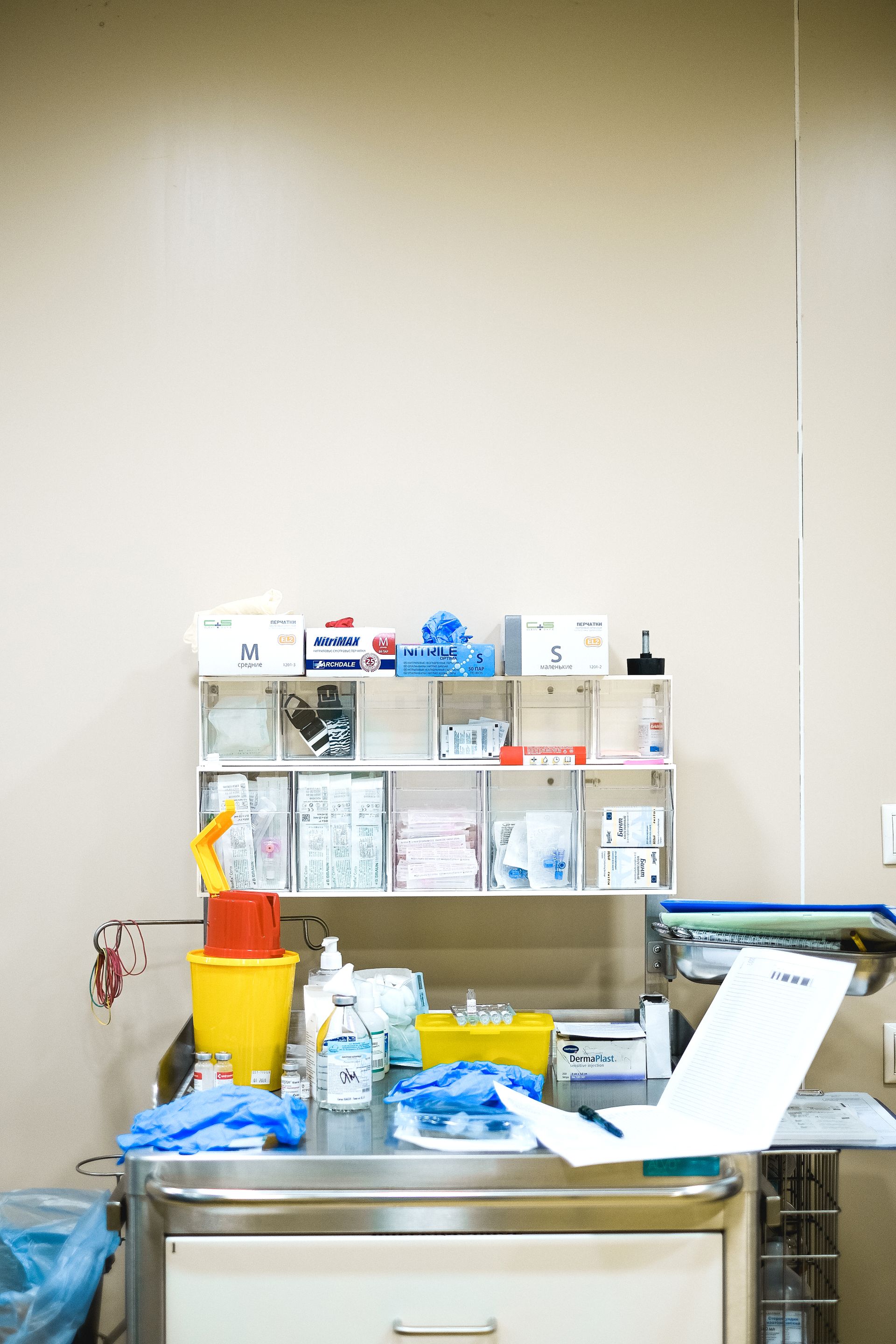
Suppliers describe a second flow running alongside the first: access. Winning a national GPO contract can make a product line; losing one can strand a warehouse. Distributors — Owens & Minor, Medline, Cardinal Health — compete to move the contracted volume, layering their own margins and logistics fees onto prices the GPO negotiated. By the time the truck reaches the dock, the price of a glove reflects at least three negotiations the hospital was not party to.
Defenders of the system make a point that deserves weight: most hospitals are in no position to do this work themselves. A 120-bed community hospital cannot staff a team to benchmark 40,000 line items, pressure-test supplier bids, and monitor contract compliance. The GPO's fee model means the service arrives free at the point of use, and industry-commissioned research routinely credits group purchasing with double-digit percentage savings on the goods hospitals buy. For a rural CFO, that is not an abstraction. It is the difference between a supply budget that balances and one that does not.
Where the leverage pools
The honest complication is that aggregation cuts both ways. The same concentration that gives hospitals leverage over manufacturers gives three organizations gatekeeping power over which manufacturers reach hospitals at all — and pays those organizations in proportion to the prices they negotiate, a structural tension the GAO flagged more than a decade ago and has never been able to resolve with data, because the contract prices themselves remain confidential.
That confidentiality is the machine's defining feature. Prices are trade secrets. Benchmarks are proprietary. A hospital can know precisely what it pays for a drug-eluting stent and have no reliable way to learn whether the hospital fifteen miles away pays half as much. What the system optimizes for — volume, standardization, administrative ease — it delivers. What it cannot deliver is an answer to the simplest question in procurement: is this a good price?
That gap is why rate data has become an asset class of its own. The contract rates moving through this machine — negotiated, tiered, benchmarked, rebated — are among the most commercially sensitive numbers in American healthcare, and the organizations that can see across them hold something no single hospital can build alone. The machine will keep running at dawn, truck after truck. The open question is who gets to see the invoices.
hospitalcontractrates.com
An exact-match domain for the transparency benchmark of hospital purchasing. Secure it through Afternic.
← Back to Insights